
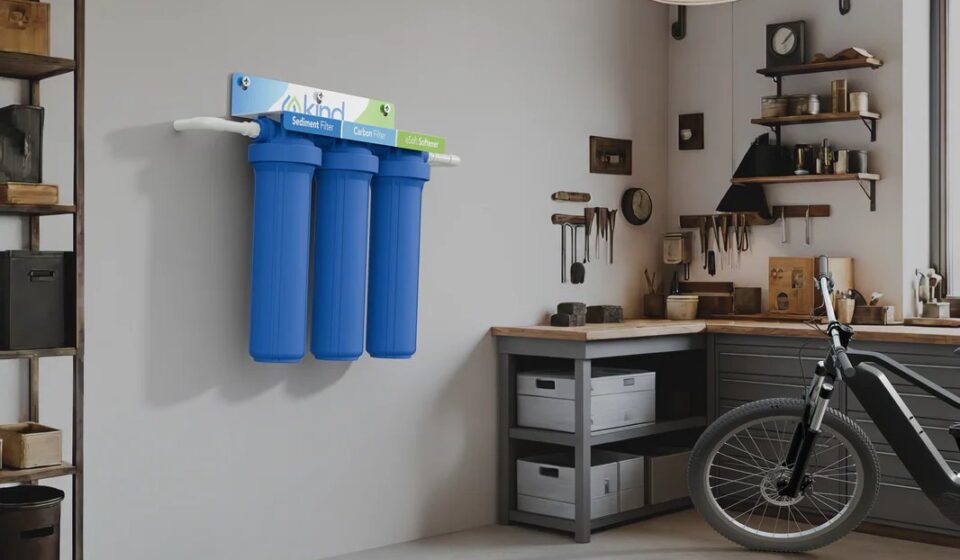

Most people only think about their tap water when something looks, smells or tastes wrong. Yet plumber Robert Schwachenwald, owner of Bizzy Bee Plumbing Inc., says more than half of his service calls involve water quality or appearance concerns. That makes a working knowledge of common household water issues surprisingly practical: many problems have a recognizable cause and a straightforward fix, while others are a signal to test the water or call in professional help.
Hard water: the chalky white problem

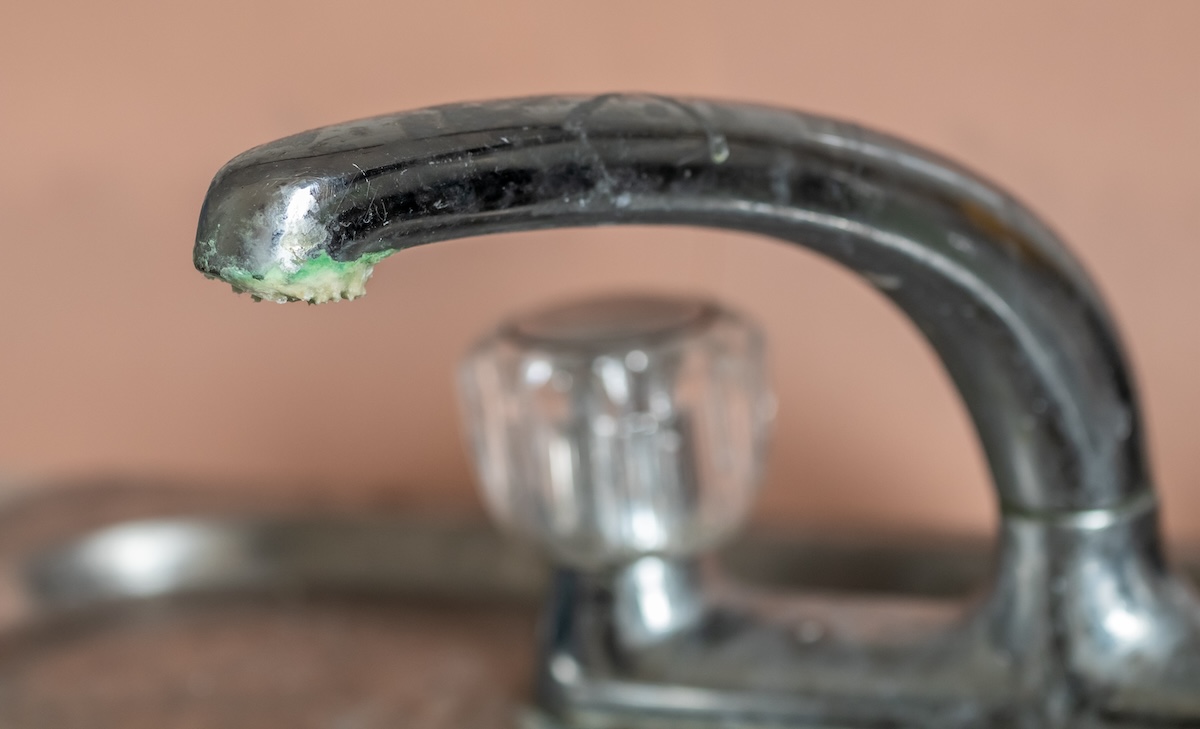
White, chalky buildup on faucets, showerheads and glassware is the classic signature of hard water. The culprit is high levels of calcium and magnesium. Beyond the visible crust, hard water can leave skin and hair feeling dry and contribute to limescale inside pipes and appliances.
For deposits already on fixtures, vinegar or citric acid cleaners can dissolve the mineral residue. Treating the source, however, usually means a whole-home water softener that works at the point where water enters the house. Schwachenwald notes that high mineral content can also be handled with point-of-use filtration where the goal is better taste.
Cloudy or rusty water: iron and manganese
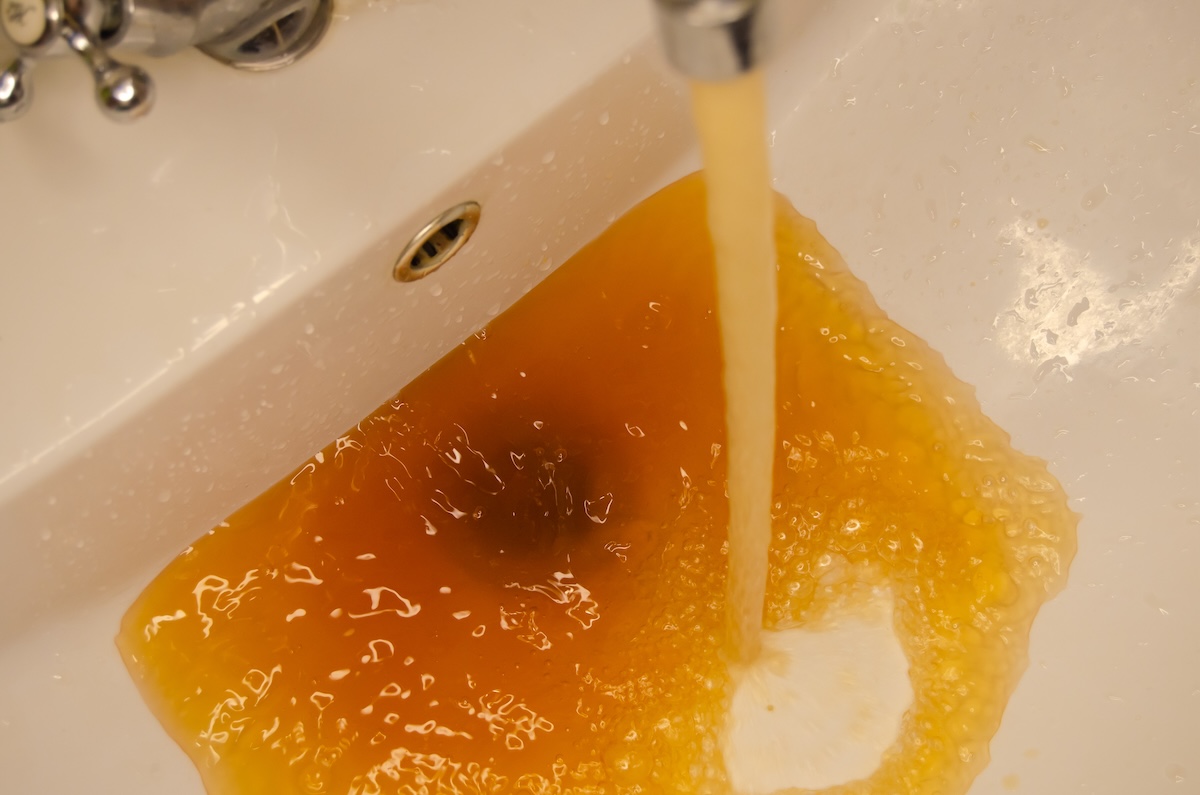
Water that looks cloudy or carries a rusty tint often points to iron or manganese. These metals can stain fixtures and clothing, turning a cosmetic annoyance into a laundry and cleaning headache. A water softener with iron removal can bring iron levels down, while an oxidizing filter is another option for removing iron and preventing stains.
Color alone does not always identify the metal, but the pattern of staining and where the discoloration appears can help narrow it down before treatment is chosen.
Rotten egg odor: hydrogen sulfide
A sulfur-like, rotten egg smell usually comes from hydrogen sulfide gas. Schwachenwald explains that the gas typically forms when bacteria react with magnesium inside a water heater. The problem is more than unpleasant: hydrogen sulfide accelerates corrosion of metal appliance parts, so ignoring it can shorten the life of equipment.
If the smell shows up only in hot water, flushing the water heater can often clear it. When the odor persists, replacing the water heater element may be necessary. For a whole-house problem, an activated carbon filter can remove hydrogen sulfide, and sulfur-specific treatment systems are also available.
Brown water and grit: sediment at work

Brown water frequently results from disturbed plumbing or sediment. A gritty texture is another clue: sediment, rust or mineral buildup is usually behind it, and aging pipes or the water heater are common sources. Schwachenwald recommends flushing the water heater yearly to remove mineral buildup before it causes trouble.
Running cold water briefly can clear brown water caused by a temporary sediment disturbance. If the color persists, a water heater flush or an evaluation of the plumbing may be needed. A sediment filter with a low micron rating can capture particles that make it through.
Musty smell or fishy taste
Musty odors and fishy tastes are generally linked to decayed vegetation compounds, with algae commonly associated with these smells. In well water, the cause may be surface runoff contamination or bacterial buildup. Running cold water can flush stagnant water and help determine whether the odor is persistent.
A saturated water filter can also produce musty odors and should be replaced. If the smell continues, the municipal water supplier should be notified.
Slimy residue: a bacterial warning

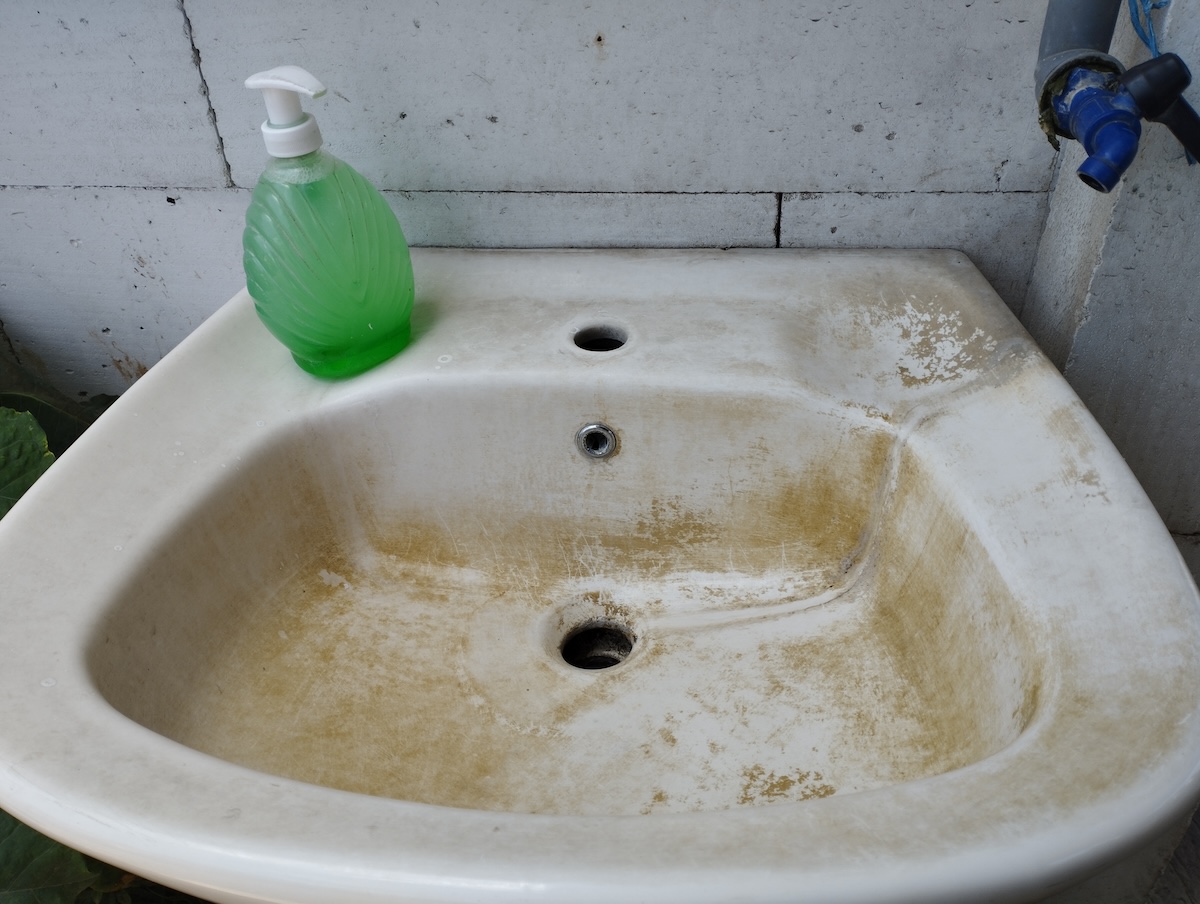
Slimy black or reddish-brown residue is not ordinary dirt. It is a sign of bacteria colonies and their waste. Residue appearing on clean water fixtures may indicate contamination, and water treatment plants cannot always guarantee pathogen-free drinking water.
Bacterial contamination calls for water testing. If it is suspected, water should be boiled before use. For a longer-term solution, a whole-home filter with a sub-micron rating can help with bacteria, while UV sterilization or an automatic chlorinator addresses persistent bacterial issues.
Blue-green stains: acidic water
Blue-green staining around drains and fixtures points to acidic water with a low pH. Acidic water can damage pipes, fixtures and appliances over time, so the stains are a symptom worth taking seriously. An acid-neutralizing filter or a soda ash feeder can raise the pH and reduce the corrosive effect.
When to test and when to call
Some water problems are mainly aesthetic. Others may indicate contamination, which is why testing is advised for musty odors, bacterial residue and acidic water. Schwachenwald’s rule of thumb is to call a plumber when a problem persists, gets worse or shows up at multiple fixtures.
Sudden changes in taste can also signal corrosion or a shift in water quality, and those cases merit a call as well. Matching the symptom to its likely cause is the first step; the second is deciding whether a cleaning routine, a filter, a softener or professional attention is the right response.


[…] Seven Household Water Problems and How to Fix Them […]
[…] Seven Household Water Problems and How to Fix Them […]